New Trends in Automated Food Warehousing
A quiet revolution is reshaping the food industry. It isn’t happening in restaurants or fields — it’s unfolding in the vast, humming corridors of automated warehouses.
Consumer demand for faster delivery, fresher products, and less waste keeps rising. As a result, food companies are turning to cutting-edge automation to transform how they store, manage, and distribute food.
From robotic picking arms to AI-powered inventory systems, the automated food warehouse of 2026 looks nothing like the manual storage facilities of a decade ago. Here are the trends shaping this space.
1. Autonomous Mobile Robots Take Center Stage
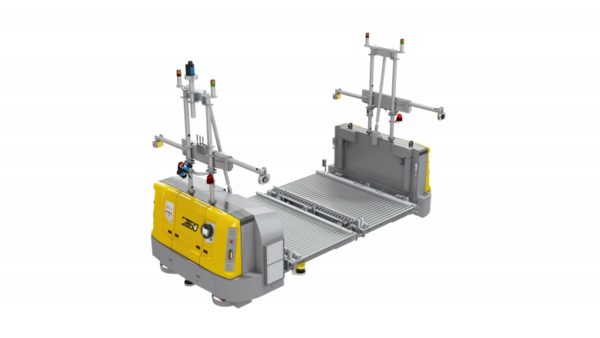
Fixed conveyor belts and stationary machinery are fading fast. In their place, Autonomous Mobile Robots (AMRs) now navigate warehouse floors dynamically. They adjust their routes in real time based on changing inventory layouts and order priorities.
In food warehousing, these robots handle temperature-sensitive environments with ease. They work efficiently in refrigerated or even frozen zones — conditions where human workers would struggle.
Companies like Ocado Technology and AutoStore have already deployed AMR fleets that process tens of thousands of grocery orders per day with remarkable accuracy. These systems speed up fulfillment and cut down on product damage from mishandling.
Key benefits of AMR warehousing:
- Up to 4x faster order picking than manual operations
- Consistent performance in sub-zero freezer environments
- Reduced product damage and spoilage
- Scalable deployment — fleets expand as demand grows
2. AI-Driven Inventory and Demand Forecasting
Perishability is one of the toughest challenges in food warehousing. Overstocking leads to waste. Understocking means lost sales and unhappy customers. Now, AI is solving this problem with remarkable precision.
Modern food warehouses use AI platforms that analyze sales history, seasonal trends, regional weather, social media signals, and even upcoming holidays. From this data, they predict demand weeks in advance.
These systems then automatically adjust reorder points and expiry-based rotation. This ensures the oldest stock always ships first — a process called FEFO (First Expired, First Out).
The result: fresher food for consumers and significantly less waste. It’s a win for both businesses and the environment.
3. Temperature-Controlled Smart Zones
Not all food is created equal, and today’s automated warehouses reflect that. Cold chain automation is now one of the fastest-growing segments in food logistics. New facilities feature intelligent temperature-controlled zones that adjust dynamically based on what’s stored inside them.
Sensors throughout the warehouse monitor temperature, humidity, and CO2 levels in real time. If conditions deviate even slightly, automated alerts trigger corrective action — adjusting refrigeration units or rerouting products to safer zones. This precision minimizes spoilage and keeps facilities compliant across dairy, meat, seafood, and fresh produce categories.
Technologies powering cold chain automation:
- IoT sensor networks for continuous environmental monitoring
- Digital twin simulations to optimize zone layouts
- Automated systems linked to HVAC and refrigeration controls
- Blockchain-based temperature logging for full supply chain transparency
4. Vertical Storage and High-Density Racking
Urban land is expensive. Yet food retailers need fulfillment centers closer to city centers to meet same-day delivery promises. So, the industry’s answer is simple: build up, not out.
Automated Storage and Retrieval Systems (AS/RS) can now stack food products up to 40 meters high. This makes extraordinary use of vertical space that traditional warehouses leave unused.
Robotic cranes and shuttle vehicles retrieve any item within seconds, no matter where it sits in the rack. Combined with real-time inventory mapping, these systems eliminate the slow search-and-retrieve process that once defined warehouse work.
5. Sustainability-Focused Automation
Consumers, regulators, and investors all expect food companies to show environmental responsibility. In response, automated warehouses are building sustainability directly into their design.
Solar power, energy-efficient LED lighting that activates only when robots are present, regenerative braking on warehouse vehicles, and automated waste sorting are now standard in next-generation facilities. Some have even achieved carbon-neutral certification while increasing throughput — proof that sustainability and efficiency can go hand in hand.
Looking Ahead
Automated food warehousing is evolving from a cost-saving measure into a true competitive edge. Companies that invest in these technologies today will offer better product quality, lower prices, and faster delivery. These advantages compound over time as systems mature and generate ever more valuable data.
Robotics costs keep falling, and AI capabilities keep rising. Because of this, automation will soon reach not just global food giants but regional distributors and specialty food companies too. The future of food warehousing is smart, green, and increasingly autonomous — and it’s arriving faster than most expect.